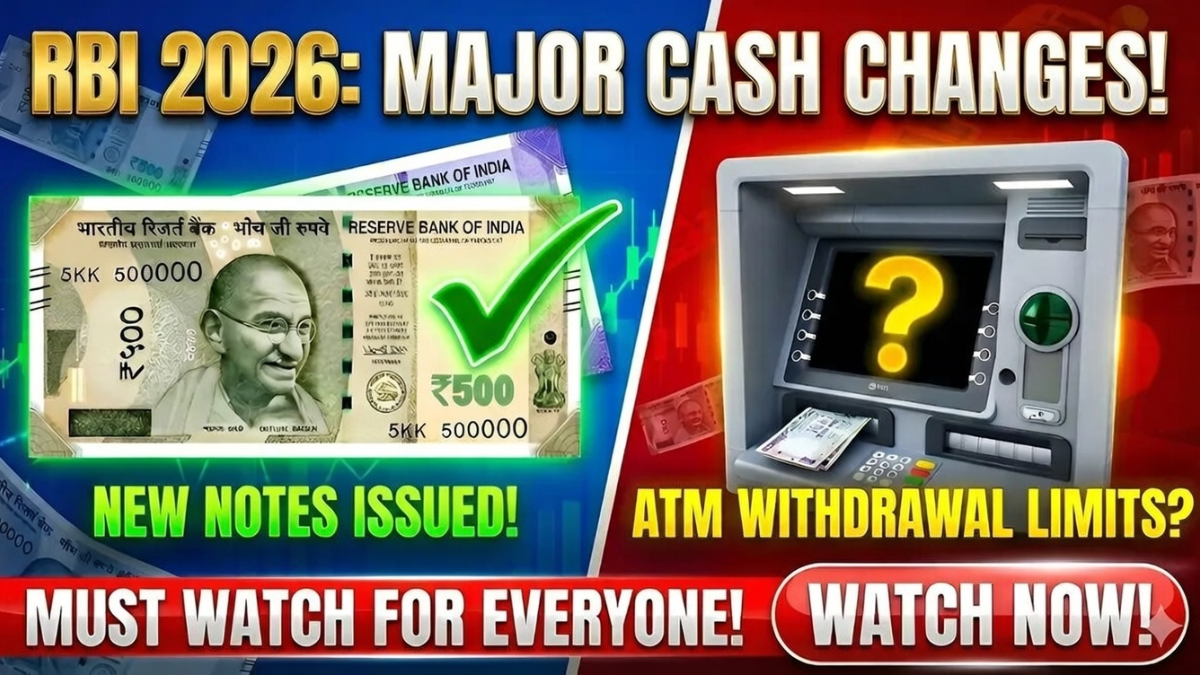
The RBI 2026 Update has sparked widespread attention as new changes related to ₹100 and ₹500 currency notes come into focus. These updates are aimed at improving security, durability, and smooth circulation of currency notes across the country. With cash still playing a major role in daily transactions, understanding these changes is important for every citizen.
The update does not invalidate existing notes but introduces important guidelines and improvements that people should be aware of.
Why RBI Introduced Changes in ₹100 & ₹500 Notes
The Reserve Bank of India regularly reviews currency circulation to prevent counterfeiting, improve note lifespan, and ensure easy identification for the public. In 2026, RBI focused on commonly used denominations like ₹100 and ₹500 because of their high circulation volume.
These changes help maintain public trust in physical currency while strengthening security features.
What Are the Key Changes in ₹100 Currency Notes
The ₹100 notes continue to remain legal tender, but RBI has introduced refinements in printing quality, ink durability, and security visibility. Enhanced clarity in design elements and better wear resistance are expected to improve the note’s life in circulation.
These improvements make the notes easier to authenticate and harder to counterfeit.
New Updates Related to ₹500 Currency Notes
₹500 notes, which are widely used for daily and high-value transactions, are also seeing upgrades. RBI has focused on improving security features and consistency in design elements to help users quickly verify authenticity.
The changes ensure that the notes remain robust during frequent handling while maintaining their familiar appearance.
Are Old ₹100 and ₹500 Notes Still Valid
Yes, all existing ₹100 and ₹500 notes already in circulation remain fully valid. RBI has clearly stated that there is no demonetization or withdrawal of these denominations under the 2026 update.
The changes are part of a gradual process, and new notes will enter circulation alongside older ones.
Security Features You Should Check
While the design remains largely familiar, users are encouraged to continue checking standard security features such as watermarks, security threads, and print quality. RBI emphasizes public awareness as a key defense against fake currency.
Improved visibility of these features helps even first-time users identify genuine notes.
Impact on Daily Cash Transactions
For the general public, these changes will not disrupt daily cash usage. Both old and newly issued notes can be used interchangeably without restrictions.
Banks and ATMs will continue dispensing mixed series of notes as part of normal operations.
What Banks and Businesses Need to Know
Banks, retailers, and cash-handling businesses should stay informed about updated note features to assist customers and identify counterfeit currency efficiently. RBI regularly shares guidelines with banks for smooth implementation.
No special exchange or deposit action is required from the public.
Why This Update Matters for Citizens
Currency updates help protect people from fraud and ensure the long-term reliability of cash. By strengthening security and durability, RBI reduces risks associated with fake notes and damaged currency.
These updates also support smoother economic transactions at every level.
What You Should Do as a Citizen
There is no immediate action required. Citizens should simply remain aware of basic security features and rely on official RBI communication for updates.
Avoid believing rumors about note bans or compulsory exchanges unless confirmed by RBI.
Conclusion
The RBI 2026 Update regarding ₹100 and ₹500 currency notes focuses on improved security, durability, and trust in physical cash. Existing notes remain valid, and new notes will gradually enter circulation. By staying informed and relying on official information, citizens can continue using cash confidently without confusion or concern.
Disclaimer: Currency-related rules and updates are subject to official RBI notifications. Citizens should always verify information through authorized RBI communications and avoid unverified claims circulating on social media.