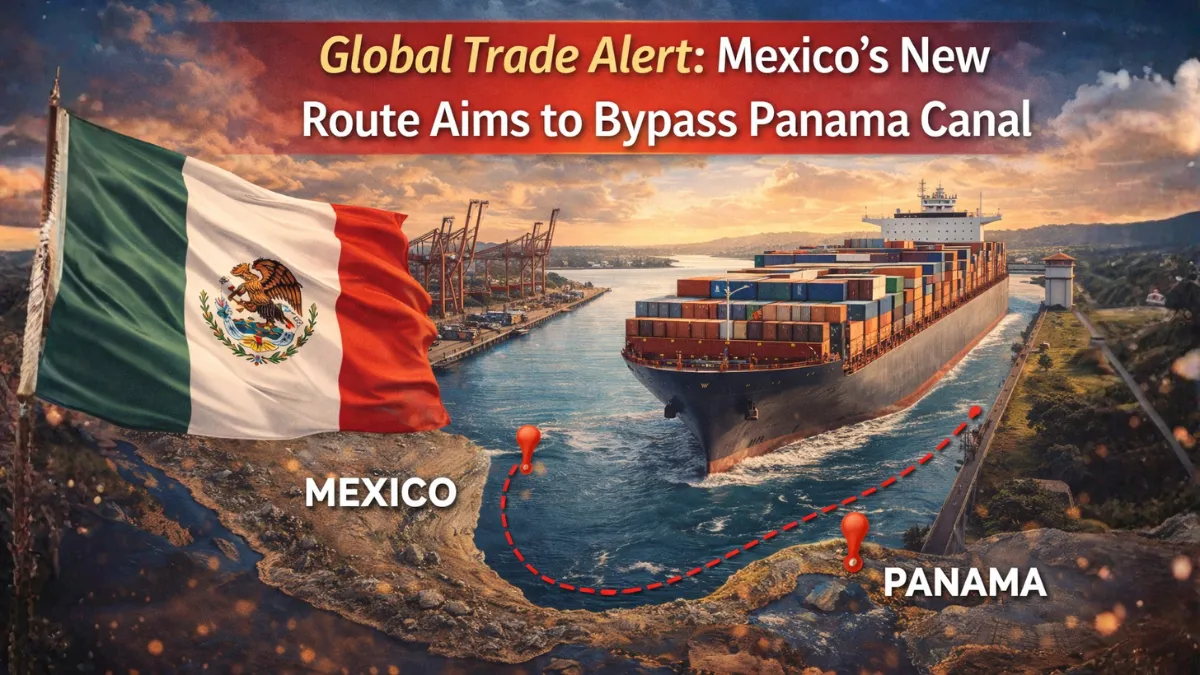
A major global trade alert has emerged as Mexico advances plans for a new logistics route designed to bypass the Panama Canal. The initiative aims to offer shippers a faster, more resilient option amid congestion risks, climate-related disruptions, and capacity constraints that have periodically affected canal transits, reshaping regional supply chains and shipping economics.
Why Mexico Is Pursuing a Canal Alternative
Recent disruptions and draft restrictions at the Panama Canal have underscored the vulnerability of single chokepoints in global trade. Mexico’s plan reflects a broader push by shippers and governments to diversify routes, reduce exposure to weather and congestion risks, and improve schedule reliability for time-sensitive cargo.
How the New Route Is Expected to Work
The corridor is designed to move cargo across Mexico using upgraded rail, port, and logistics infrastructure, transferring containers between oceans without the need for a canal transit. By integrating ports, customs processes, and inland transport, the route seeks to provide a predictable alternative for specific trade flows rather than a full replacement for canal traffic.
| Route Element | What the New Corridor Involves |
|---|---|
| Core Objective | Bypass canal bottlenecks and delays |
| Geography | Cross-country link between Atlantic and Pacific coasts |
| Cargo Focus | Containers, autos, energy-related freight |
| Trade Impact | Shorter transit times for select lanes |
| Strategic Context | Diversification of global shipping routes |
Implications for Global Shipping and Costs
If executed efficiently, the corridor could ease pressure during peak seasons, offer competitive transit times for certain lanes, and introduce pricing discipline by adding capacity outside the canal system. Shipping lines may use the route tactically during disruptions, potentially stabilising schedules and mitigating rate spikes.
Regional and Geopolitical Significance
Beyond logistics, the project carries strategic weight for North American trade integration and nearshoring trends. Improved cross-country connectivity could attract manufacturing investment, deepen regional supply chains, and enhance resilience for exporters serving the Americas.
What to Watch as the Plan Advances
Key milestones include infrastructure readiness, port throughput, customs coordination, and commercial uptake by carriers. Early performance on reliability and end-to-end timing will determine whether the route becomes a regular feature of global trade planning.
Conclusion: Mexico’s canal-bypass corridor adds a meaningful layer of resilience to global shipping, offering an alternative that could reduce chokepoint risk and improve reliability for select trade flows.
Disclaimer: This article is based on publicly discussed plans and market analysis. Actual capacity, timelines, and commercial impact will depend on infrastructure completion, regulatory coordination, and carrier adoption. Stakeholders should rely on official announcements and contractual terms for accurate and legally binding information.