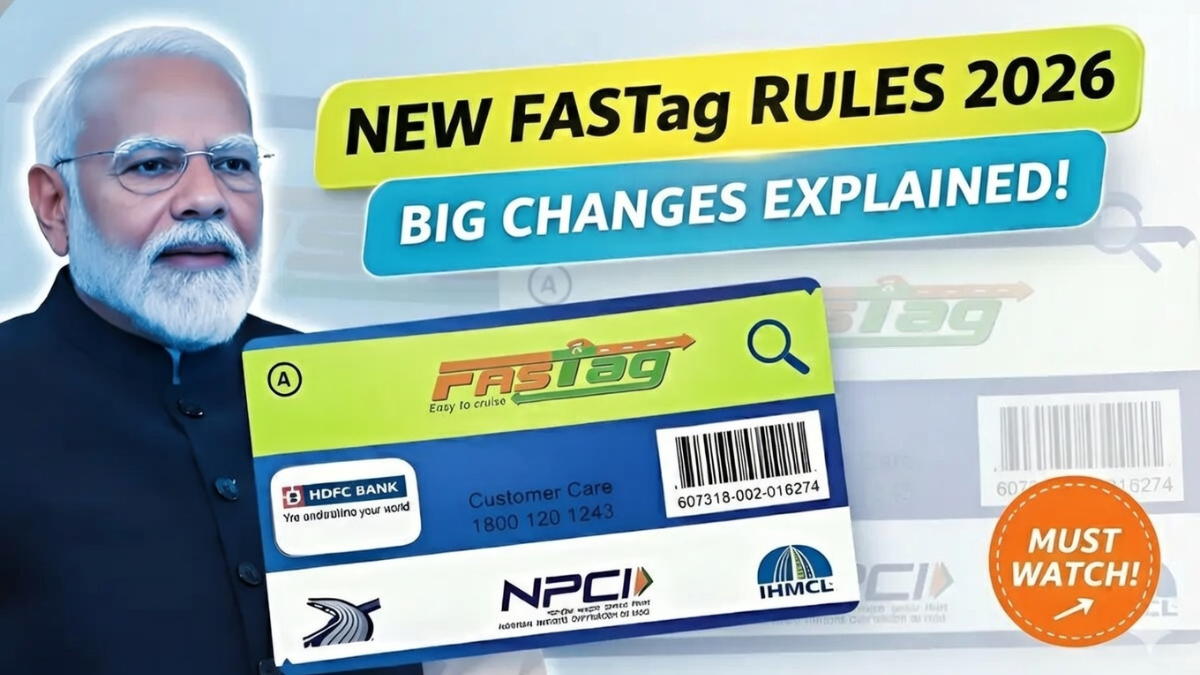
The FASTag New Rules 2026 introduce stricter guidelines, updated penalty charges, and mandatory compliance requirements for all vehicle owners using electronic toll collection. These changes are aimed at reducing misuse, improving toll efficiency, and ensuring that only verified and active FASTag accounts operate on national highways.
Vehicle owners who ignore these updates may face FASTag suspension, higher penalties, or inconvenience during highway travel.
Why FASTag Rules Were Revised in 2026
Authorities observed multiple issues such as duplicate FASTags on a single vehicle, incomplete KYC records, inactive tags causing toll disputes, and misuse through unauthorized linking. To fix these gaps, the government tightened rules to improve transparency and system reliability.
The 2026 update focuses on accountability, accuracy, and smoother toll operations nationwide.
Authority Implementing the FASTag Rules
FASTag operations and enforcement fall under National Highways Authority of India, in coordination with banks and FASTag service providers. The authority ensures uniform implementation of toll policies across national highways.
Mandatory KYC Compliance for FASTag Users
Under the new rules, full KYC is mandatory for every FASTag account. Users must ensure their identity, vehicle registration number, and contact details are correctly verified.
FASTags with incomplete or outdated KYC are liable for suspension until verification is completed.
Updated Penalty Charges Explained
Penalty charges have been revised to discourage non-compliance. Vehicles attempting to pass toll plazas with blocked, inactive, or blacklisted FASTags may be charged double toll fees or forced to pay in cash with additional penalties.
Repeated violations can lead to longer suspensions or permanent deactivation of the FASTag.
One Vehicle, One FASTag Rule
The 2026 rules strictly enforce the one vehicle one FASTag policy. Vehicles found using multiple FASTags may have all linked tags blocked.
This rule helps prevent toll revenue leakage and incorrect transaction records.
FASTag Suspension and Blacklisting Rules
FASTags may be suspended for reasons such as incomplete KYC, incorrect vehicle details, long-term inactivity, or misuse. Once suspended, the FASTag will not function at toll plazas until the issue is resolved.
Users receive alerts before suspension, giving them time to take corrective action.
Impact on Daily Highway Travel
During the initial implementation phase, some users may face temporary inconvenience if their FASTag status is non-compliant. However, once fully implemented, the new rules are expected to reduce congestion, failed scans, and disputes at toll plazas.
Compliant users will benefit from faster and smoother highway travel.
How to Check and Update FASTag Details
FASTag users can check KYC status and update details through their issuing bank’s FASTag portal or mobile app. Updating documents early helps avoid last-minute issues during travel.
Ensuring balance availability and correct vehicle details is also essential under the new rules.
Who Needs to Act Immediately
Vehicle owners who purchased FASTag years ago, changed vehicles, or never completed full KYC should act immediately. Commercial vehicle operators and fleet owners must verify compliance for all vehicles to avoid operational disruptions.
What FASTag Users Should Do Now
Users should confirm their FASTag is active, KYC-compliant, and correctly linked to their vehicle. Any duplicate or unused FASTags should be closed officially.
Staying updated with bank notifications and FASTag alerts will help maintain uninterrupted service.
Conclusion
The FASTag New Rules 2026 mark a significant step toward stricter compliance and better toll management. With mandatory KYC, revised penalty charges, and stronger enforcement, vehicle owners must ensure their FASTag accounts are fully updated. While the rules are stricter, they promise a smoother, fairer, and more efficient highway travel experience for compliant users.
Disclaimer: FASTag rules, penalties, and enforcement timelines may vary based on official notifications from NHAI and issuing banks. Users should always refer to official sources for the latest updates.